
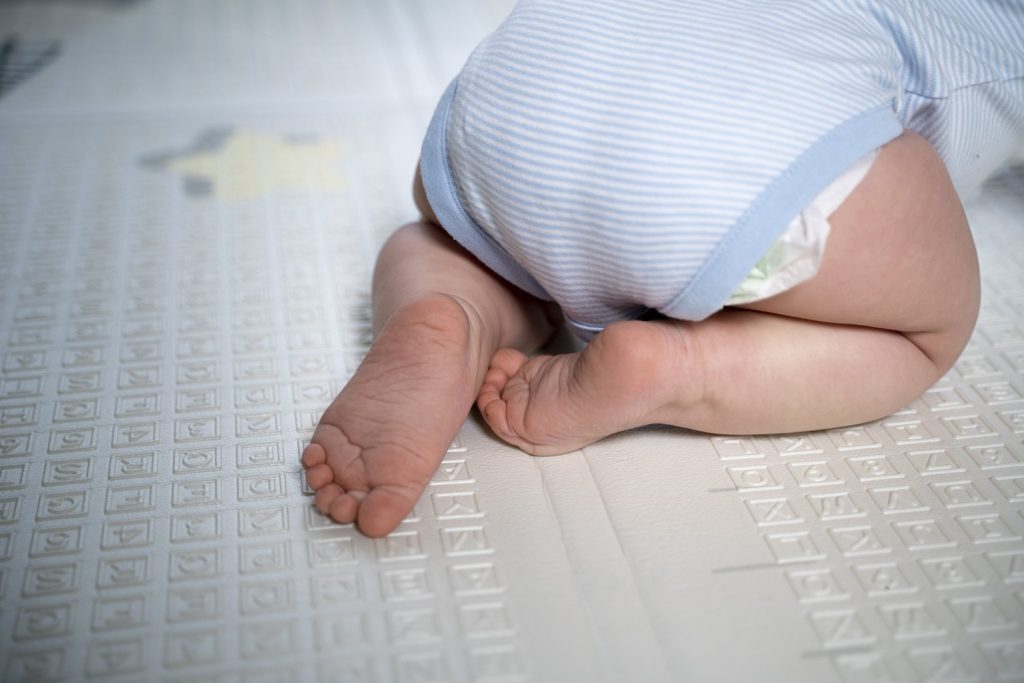
Research suggests that pediatric physiotherapy can effectively help manage infant constipation by improving trunk mobilityparticularly through techniques involving trunk rotation and abdominal massage.
The connection lies in the relationship between the musculoskeletal system and gastrointestinal function. When a baby’s trunk is stiff or lacks full range of motion, this may lead to increased tension in the abdominal muscles, which could interfere with the normal passage of stool.
Symptoms of constipation in babies
- Has bowel movements fewer than 3 times per week
- Has difficulty passing stool, and the stools are larger than usual
- Hard, dry, lumpy stools or small, pellet-like stools
- Very foul-smelling gas or stools
- Reduced apetite
- A hard or bloated tummy
Additional signs may include:
- Crying or appearing to be in pain when trying to have a bowel movement
- Straining or stiffening the body, as if trying to “hold it in”
- Irritability or fussiness
- Less energy than usual
- Sometimes, small streaks of blood in the stool (due to irritation caused by hard stools)
Important:
Constipation is related more to how difficult it is for the baby to pass stool and how hard the stool is, rather than simply how frequently the baby has a bowel movement. It is important to consult your pediatrician in every case.
The Role of Trunk Rotation and Mobility
Physiotherapy interventions for infants primarily focus on promoting intestinal motility and regulating neuromuscular function. Improving active trunk movement allows the internal organs to function more effectively.
- Space and Function: Increased trunk mobility and an upright position in older children who are unable to stand independently (for example, through standing or walking training) provide more space within the trunk cavity. This has been shown to improve gastric emptying and reduce constipation.
- Muscle Synergy: Dynamic exercises and trunk mobilization through manual therapy contribute to functional benefits for bowel function.
Physiotherapy Interventions
The following methods are commonly used in pediatric physiotherapy to address constipation:
| Technique | Proposed mechanism | Outcome/Effect |
| Abdominal Massage | Stimulates the parasympathetic nervous system and vagus nerve activity. | Reduction in Constipation Assessment Scale (CAS) scores and fecal incontinence. |
| Active Range of Motion / Trunk Rotation | Increases flexibility and reduces abdominal muscle tension. | Improved trunk range of motion is significantly associated with a reduction in gastrointestinal symptoms. |
| Early walking / Mobility | Encourages weight-bearing and trunk strengthening. | Leads to improved bowel and bladder emptying and reduced constipation. |
Treating Constipation in Your Baby
- Give your baby a warm bath to help relax the bowel.
- Gently massage your baby’s tummy using circular, clockwise movements. The movements should be firm but gentle, starting around the navel and moving outward.
- Lay your baby on their back and gently move their legs back and forth, as if they were “cycling.”
Observe your baby’s movement. Is it appropriate for their age? Could your baby, in addition to experiencing constipation, have reduced trunk mobility? Do they have low muscle tone in the trunk and appear sluggish in their movements? Do their arms and/or legs feel unusually stiff or tight?
If so, consult your pediatrician. Your baby may benefit from an assessment by a pediatric physiotherapist. During the assessment, you can receive appropriate guidance on how to handle and position your baby during everyday activities, as well as an exercise program designed to help improve both your baby’s mobility and the constipation they are experiencing.
References:
Buffone, F., Monacis, D., Tarantino, A.G., Dal Farra, F., Bergna, A., Agosti, M. & Vismara, L. (2022). Osteopathic Treatment for Gastrointestinal Disorders in Term and Preterm Infants: A Systematic Review and Meta-Analysis. Healthcare. 10, 1525.
Indrio, F., Neu, J., PettoelloMantovani, M., Marchese, F., Martini, S., Salatto, A. & Aceti, A. (2022). Development of the Gastrointestinal Tract in Newborns as a Challenge for an Appropriate Nutrition: A Narrative Review. Nutrients. 14, 1405.
Rice, A. D., Patterson, K., Reed, E. D., Wurn, B. F., Klingenberg, B., King, C. R., & Wurn, L. J. (2016). Treating Small Bowel Obstruction with a Manual Physical Therapy: A Prospective Efficacy Study. BioMed Research International, 2016, 1–8.
Sheikh, S. S., Sharath, H. V., & Seth, N. H. (2024). A Rare Case Report on Postoperative Rehabilitation in Hirschsprung Disease. Cureus.
www.nhs.uk Xinias I, Mavroudi A. (2015). Constipation in Childhood. An update on evaluation and management. HIPPOKRATIA. 19, 1: 11-19.