
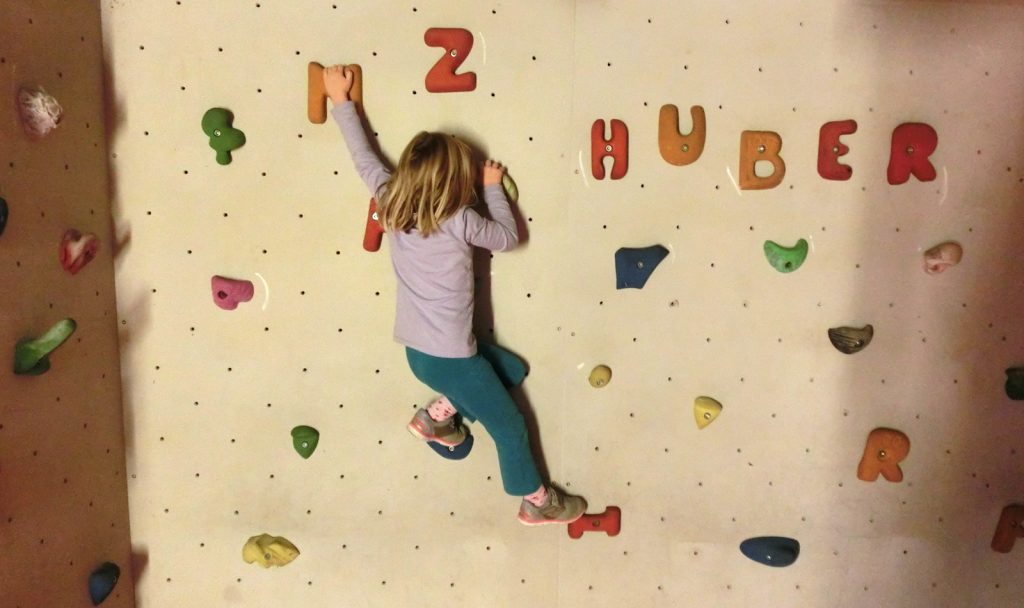
Climbing is an outdoor, as well as, an indoor recreational activity that is becoming increasingly popular nowadays. In our country, there are now many facilities that offer both adults and children the opportunity to try it. Although climbing may seem like a dangerous activity to many people, when carried out with the appropriate equipment and under proper supervision, it is a safe and enjoyable activity for everyone, including children and people with disabilities.
According to Buechter and Fechtelpeter (2011), climbing is beneficial in neurological rehabilitation because it requires the individual to solve complex cognitive problems due to the continuous variation and sequencing of movements. One advantage of climbing is that it can be a more engaging activity than other types of therapeutic exercises because of its adventurous nature.
Climbing can be an excellent activity for children with intellectual and motor difficulties for many reasons. Climbing has been shown to improve spatial awareness, hand-eye coordination, and balance. It also teaches children planning, problem-solving, and goal-setting, which are very important skills for school. In addition, it improves attention and concentration during the performance of a specific motor skill and teaches children to overcome fear and develop self-control. Climbing a wall is an exceptional activity for coordinating the upper and lower limbs, as the child has to determine where to place their hands and feet and in what sequence. The climbing wall helps children develop trunk and finger strength. It also provides proprioceptive input to the muscles and joints.
Climbing combines the challenge of height with strength, flexibility, and movement coordination. The typical climbing posture—with the legs abducted and the hips externally rotated, alternating knee flexion and extension, as well as ankle dorsiflexion and plantarflexion—may help improve gait abnormalities in children with cerebral palsy. The findings of the study by Böhm, Rammelmayr, and Döderlein (2014) showed improvements in walking speed and step length among the participating children. However, the researchers emphasized that therapeutic climbing should not replace physiotherapy, as doing so could lead to deterioration in gait in children with cerebral palsy. According to the research by Koch et al. (2015), therapeutic climbing may improve grip strength, postural control, mobility, and the management of spasticity in children with cerebral palsy.
What does KidsPhysiotherapy say? Simply give it a try! In December 2015, we visited a climbing facility in the center of Thessaloniki with our children and, with the help of a climbing instructor, we put this idea into practice. It was a wonderful experience for all of us, and we are ready to do it again with anyone who is interested!
Böhm Η., Rammelmayr Μ.Κ.& Döderlein L. (2015). Effects of climbing therapy on gait function in children and adolescents with cerebral palsy – A randomized, controlled crossover trial. European Journal of Physiotherapy 17:1, 1-8.
Buechter R.B. & Fechtelpeter D. (2011). Climbing for preventing and treating health problems: a systematic review of randomized controlled trials. German Medical Science. Vol. 9.
Rock Climbing for Children with Disabilities. http://www.nchpad.org/464/2342/Rock~Climbing~for~Children~with~Disabilit…