
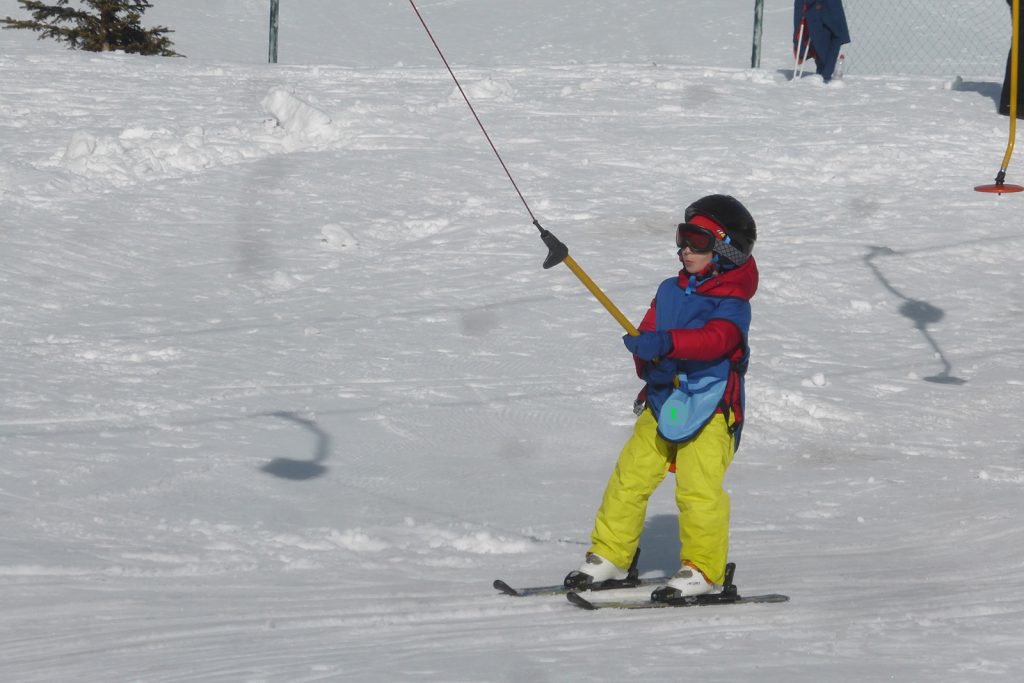
As is well known, children’s participation in outdoor recreational activities (horse riding, archery, cycling, skiing, etc.) has a positive effect on their physical and psychological well-being. For children with disabilities, however, it means something more: it is an important factor in removing the barriers that limit them. Imagine, for example, a child with a motor disability that is clearly noticeable when walking, being able to ski down a slope while children without disabilities may not be able to manage it! Skiing can therefore mean adventure, exercise, development, progress, self-esteem, and independence.
The opportunities provided by skiing for children with disabilities go far beyond the increase of their mobility. Skiing provides access to a typical recreational activity, both physically and psychologically.
Can skiing also be used as a form of therapeutic exercise? A relevant study evaluating the effect of downhill skiing on gross motor function in children with spastic cerebral palsy showed that not only did gross motor skills improve after a period of 10 weeks, but these improvements were also maintained for an additional 10 weeks.
The adapted skiing program I implement is based on the method developed by Anne-Marie Ducommun and is intended for children with mild to moderate motor difficulties. It consists of three independent stages:
- Ασκήσεις προετοιμασίας πριν το σκι
- Ασκήσεις προθέρμανσης στην πίστα
- Κατάβαση με τα σκι με παράλληλη θέση των ποδιών
The preparatory exercises are based on the principles of Neurodevelopmental Treatment (NDT) and teach skiers with cerebral palsy, appropriate sensorimotor adaptations.
For these exercises, participants can use exercise balls, balloons, scarves, and poles. The ball provides enjoyment and encourages dynamic activity. At the same time, it requires attention and movement control. This enhances balance reactions, active participation, and interaction within the group.
Warm-up exercises with the ski boots and skis on are performed before each lesson to improve general mobility and confidence. They also give the child the opportunity to adapt to the environmental conditions and the quality of the snow.
Downhill skiing, both for beginners and more advanced skiers, requires appropriate individualized therapeutic preparation according to the needs and abilities of each child.
If a beginner has difficulty maintaining their balance, the instructor skis alongside them and provides gentle support with their hands, helping them feel and maintain the correct position while skiing downhill. This assistance is gradually reduced as the skier gains confidence and becomes able to correct their own position while skiing.
Basic skills required for learning to ski:
Motor skills:
1. Independent walking, even if the gait pattern is atypical
2. Ability to stand on one leg and maintain balance, with or without assistance
3. Ability to hop in place, with or without assistance
4. Ability to maintain a side-sitting position on both sides
5. Ability to hold ski poles, with or without specialized gloves
Age:
From 4 years old: accompanied by parents
From 7 years old: independently, in groups
Benefits:
Improved balance
Improved body symmetry
Improved physical fitness
Better anticipation of movements
Better adaptation of the body to the shape and terrain of the slope
Improved pelvic mobility and stability
Improved rotational movements of the trunk
Improved control of lower-limb movements
Skiing can provide children with independence, joy, and motivation, while increasing their determination and self-confidence and, consequently, promoting greater independence.
Ducommun, Anne-Marie. (1999). Adaptive Parallel Track skiing. Clinician’s view.
O’ Leary, Η. (1994). Bold Tracks. Teaching adaptive skiing. Johnson Books.
Sterba, JA. (2006). Adaptive downhill skiing in children with cerebral palsy: effect on gross motor function. Pediatric Physical Therapy. 18(4):289-96.