
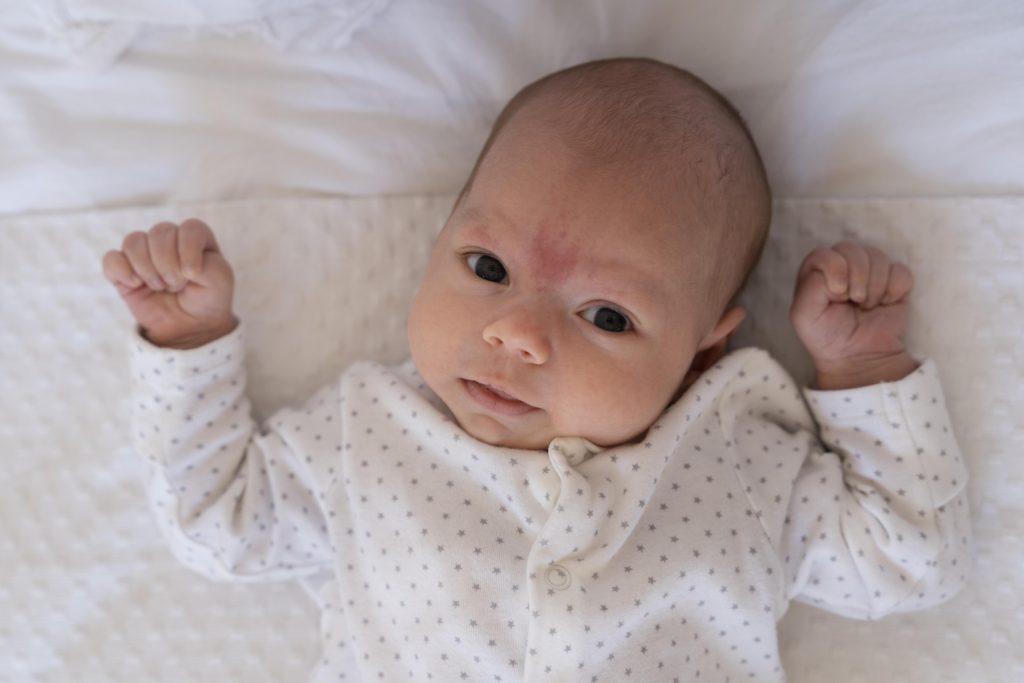
Torticollis is a condition affecting the muscles of the neck that causes the head to remain rotated toward one side, with lateral flexion toward the opposite side. Some babies (1–2%) are born with this condition (congenital torticollis), while others develop it after birth (acquired torticollis). Babies with torticollis usually have impaired muscle control because some muscles are tight or contracted, while others are weak. This can lead to delays in the development of gross motor skills. If torticollis is not treated early, it can lead to plagiocephaly, a condition in which the bones of one side of the skull become compressed by the weight of the head, resulting in an asymmetrical head shape.
Research on conservative treatment of torticollis, such as the approach used in pediatric physiotherapy, has demonstrated effectiveness, with success rates ranging from 61% to 99% when intervention begins before the age of one. Torticollis can usually be easily identified by a pediatrician and can often be managed effectively by parents using conservative approaches. Daily care is extremely important. Torticollis can also affect breastfeeding. In the following article, you can find examples of breastfeeding positions for children with torticollis: http://otnotes.blogspot.gr/2013/08/breastfeeding-child-with-torticollis….
Signs of Torticollis:
- The baby consistently holds their head turned toward one side.
- The baby’s chin points toward one side rather than toward the center.
- The baby has a small lump or swelling on one side of the neck, opposite to the direction in which they turn their head. (This is usually painless and is not dangerous.)
- When lying on their back, the baby consistently holds their head in a particular position.
- When placed on their tummy, the baby cries and prefers to turn their head toward only one side.
- The baby may dislike being placed in a position different from their preferred one and quickly return to their usual position.
- When held close to your shoulder, the baby consistently looks toward one side.
- During breastfeeding, the baby may prefer one breast over the other or accept only a particular feeding position.
It is important for the physiotherapist to demonstrate the exercises to the parents or caregivers so that they can perform them with the baby daily and as frequently as possible.
The main exercises include:
- Stretching the tight muscles.
- Using positions that encourage the baby to adopt the opposite position from the one they normally hold their head in, with the help of auditory and visual stimuli.
- Activities such as breastfeeding, which can encourage a more symmetrical head position. Remember that the baby should not be placed in an extreme position of head rotation and lateral flexion during feeding, as this may make swallowing difficult.
An example of exercises for left-sided torticollis can be seen in the following video:
References:
Kim Lephart, PT, DPT, MBA, PCS, Strategies for working with children with Torticollis
Torticollis and Toe walkers, Physical Therapy.